
A working garage door depends on strong, properly functioning garage door springs. These tightly wound components help lift and lower the garage door safely while reducing strain on the garage door opener. When a broken garage door spring suddenly fails, many homeowners immediately wonder: Can I fix my own garage door spring?
The short answer is yes, but that does not mean it is safe. Garage door spring repair involves high-tension components, specialized equipment, and a significant risk of serious injury. While some experienced do-it-yourselfers may attempt garage door spring replacement on their own, most homeowners are better off calling a professional for safe, reliable repairs.
What Do Garage Door Springs Actually Do?
Garage door springs are responsible for balancing the weight of the door. Without properly functioning springs, even lightweight newer doors can become extremely heavy and difficult to operate.
Whether you have a standard residential garage door or a commercial roll-up door, the springs work by storing and releasing stored energy. This allows the garage door opener to raise and lower the door smoothly instead of carrying the full weight alone.
There are two primary spring systems used in residential garage door setups: torsion springs and extension springs.
Garage Door Torsion Springs
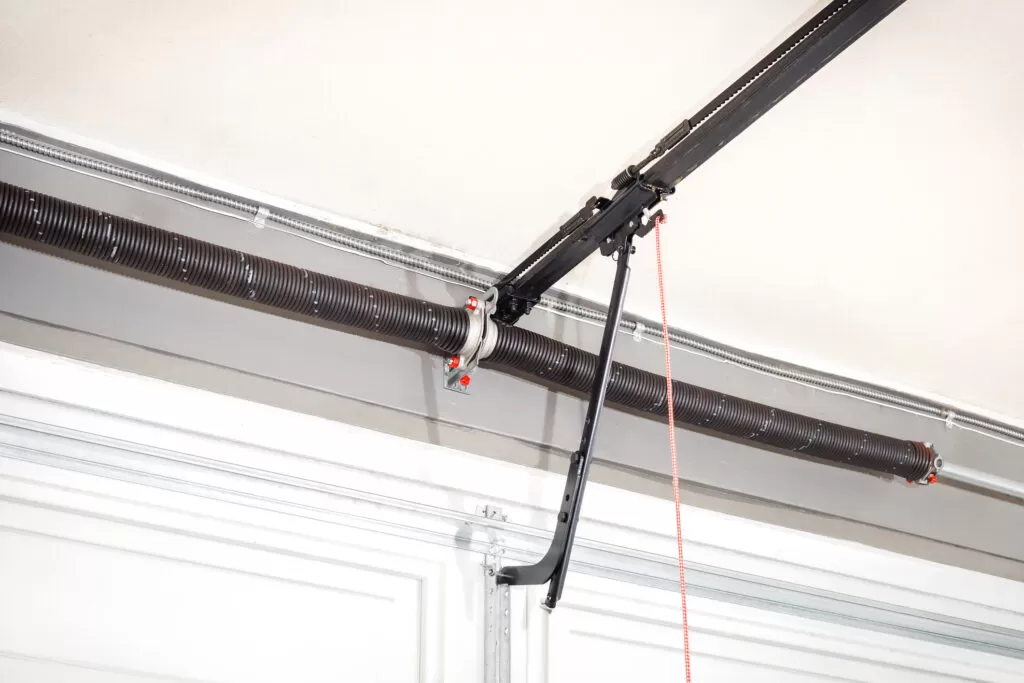
Garage door torsion springs are mounted above the garage door opening on a torsion shaft. These springs use rotational force to lift the door. Most modern systems use one or two springs, depending on the size and weight of the door.
A torsion spring system includes several important components, including the center bearing plate, center bracket, cable drum, spring cone, winding cone, torsion bar, and drum set screws. During operation, the wound spring tightens and loosens as the door moves between the open position and the closed position.
Garage door torsion springs are durable, efficient, and common on newer doors because they provide smoother operation and better balance.
Extension Springs
Extension springs are installed along the horizontal tracks on either side of the garage door. These springs stretch and contract when the door moves. While extension springs are still found on some homes, torsion systems are generally considered safer and more reliable.
Signs You Need Garage Door Spring Repair
A broken garage door spring can create several noticeable problems. In many cases, homeowners first realize something is wrong when the garage door suddenly stops functioning properly.
The Door Only Opens A Few Inches
One of the most common signs of a broken spring is when the garage door opener struggles to lift the door. The door may move only a few inches before stopping completely.
Loud Bang or Snapping Sound
When a spring breaks, it can create a loud snapping noise similar to a firecracker or gunshot. This often happens because of the sudden release of stored energy inside the spring.
Crooked or Unbalanced Door
If one of two springs fails while the other spring remains intact, the door may appear uneven or crooked while opening.
The Door Feels Extremely Heavy
Garage door springs counterbalance the weight of the door. Without them, the garage door can become extremely heavy and unsafe to lift manually.
Visible Damage to the Spring
You may notice a gap in the old spring, rust buildup, stretched coils, or visible wear around the winding cone or spring cone.
So, Can I Fix My Own Garage Door Spring?
Many homeowners search online for ways to replace garage door springs because DIY repairs appear more cost-effective than hiring a professional. However, garage door spring replacement is one of the most dangerous home repairs.
A broken spring stores tremendous force. If the spring tension is released improperly, severe injury can occur instantly.
Why Garage Door Spring Repair Is Dangerous
Replacing torsion springs requires specialized knowledge and proper tools. Technicians often use winding bars or winding rods made from hardened steel rods to carefully adjust the spring tension in controlled quarter-turn increments.
Using the wrong tools, turning the spring in the wrong direction, or loosening set screws improperly can cause the bar to slip violently. This can result in broken fingers, facial injuries, damaged body parts, or even a trip to the emergency room.
Even experienced do-it-yourselfers can make dangerous mistakes during garage door spring replacement.
Common DIY Mistakes
Some of the most common DIY garage door spring repair mistakes include:
Using Improper Equipment
Some homeowners attempt to replace torsion springs without the proper tools. Screwdrivers, pliers, or makeshift bars should never replace professional winding bars.
Installing the Wrong Spring Type
Every garage door requires a specific spring type based on the weight and height of the door. Installing incorrect new springs can affect proper balance and shorten the life expectancy of the system.
Improper Tension Adjustment
Garage spring systems must maintain correct tension for safe operation. An overwound spring or under-tensioned spring can create further damage to the garage door opener and other components.
Ignoring Safety Procedures
Professionals wear safety glasses and use safety equipment throughout the repair process. Homeowners attempting DIY repairs often overlook basic safety precautions.
What Is Involved in Garage Door Spring Replacement?
Replacing torsion springs involves multiple careful steps that should only be completed with professional training and proper tools.
First, technicians gather tools including an open-end wrench, winding bars, locking pliers, and other specialized equipment. The garage door must be secured in the open position or partially lowered, depending on the repair method.
The technician will slowly release tension from the old spring using one bar and a second bar while carefully moving from one next hole position to another on the winding cone. This process requires precise movements because the spring remains under high tension throughout the repair.
After removing the broken garage door spring, the technician installs the new springs onto the torsion shaft. Components like the cable drum, center bearing plate, torsion bar, and set screws must all be aligned properly.
Once the springs are installed, the technician winds the springs in the right direction to achieve correct tension. The garage door is then tested repeatedly to test door balance and confirm smooth operation at the halfway point and full door open position.
Trust Your Garage Door Guys for Safe Garage Door Spring Repair
Garage door spring repair is not a simple DIY project. Between the risks of high-tension springs, the need for winding rods and specialized tools, and the potential for severe injury, most homeowners should avoid attempting to fix their own garage door springs.
If you are dealing with a broken garage door spring in Simi Valley, CA, or the surrounding areas, Your Garage Door Guys is ready to help. Our experienced technicians provide safe, professional garage door spring replacement and repair services for residential garage door systems of all sizes.
Contact Your Garage Door Guys today to schedule same-day garage door spring repair and get your door working safely again.